

Aluminium Extrusion Process Overview
Understanding the aluminium extrusion process is important for both local and export buyers who require stable quality and reliable production. A well-controlled process ensures that each aluminium profile meets the required specifications for industrial and construction applications.
The process starts with aluminium billet preparation, where the raw material is produced with controlled alloy composition to ensure uniformity and consistency. This step forms the foundation of the entire extrusion process.
The billet is then heated to a specific temperature to make it suitable for extrusion. Proper heating allows the aluminium to flow smoothly through the die while minimizing the risk of defects.
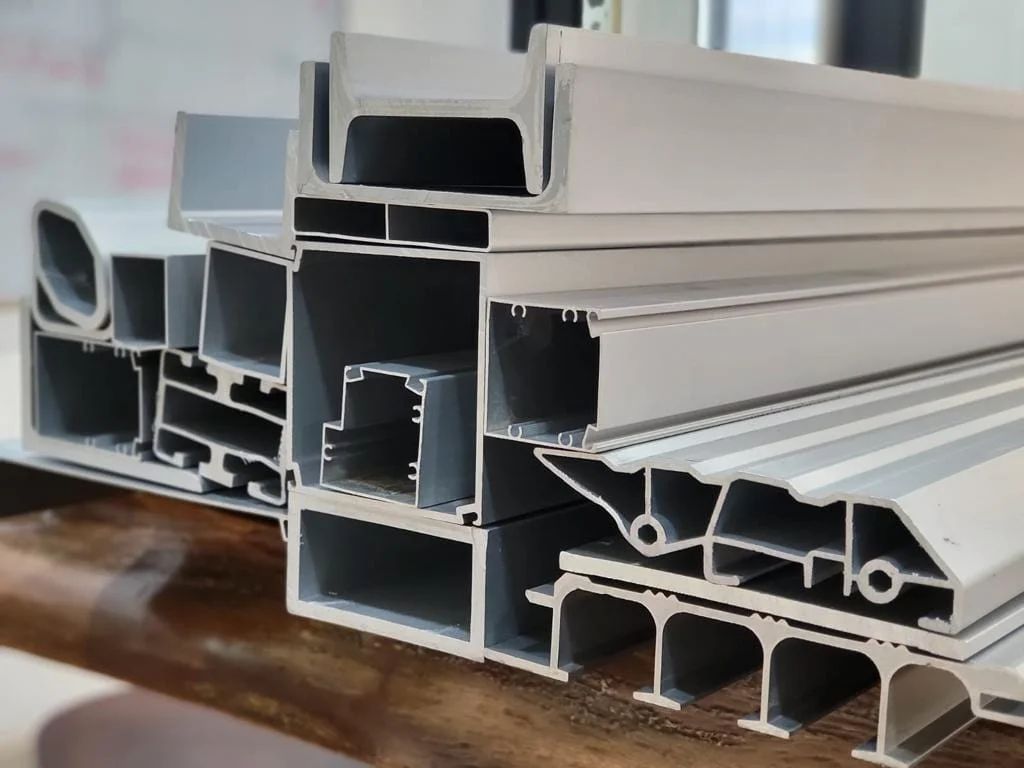
In the extrusion stage, the heated billet is pressed through a die to form the desired profile shape. This step determines the geometry, tolerance, and overall accuracy of the final product.
After extrusion, the aluminium profiles are cooled rapidly to maintain their mechanical properties and prevent deformation. This cooling process is critical for ensuring strength and durability.
The profiles are then straightened to remove internal stress and ensure proper alignment. This improves dimensional accuracy and prepares the profiles for further processing.
Next, the profiles are cut according to required lengths, ensuring precision and consistency for project or distribution needs.
Heat treatment is applied to increase strength and performance, typically using T5 or T6 processes. This step is essential for applications that require higher mechanical performance.
The final stage is surface finishing, where anodizing or powder coating is applied to enhance corrosion resistance and appearance. This makes the aluminium profiles suitable for both indoor and outdoor use.
With a fully controlled process, ALCA Metals provides aluminium extrusion solutions from Indonesia with consistent quality and reliable supply for both local and export markets.